Culture & film
The Black Madonna of Montserrat: Legend, History and How to See Her
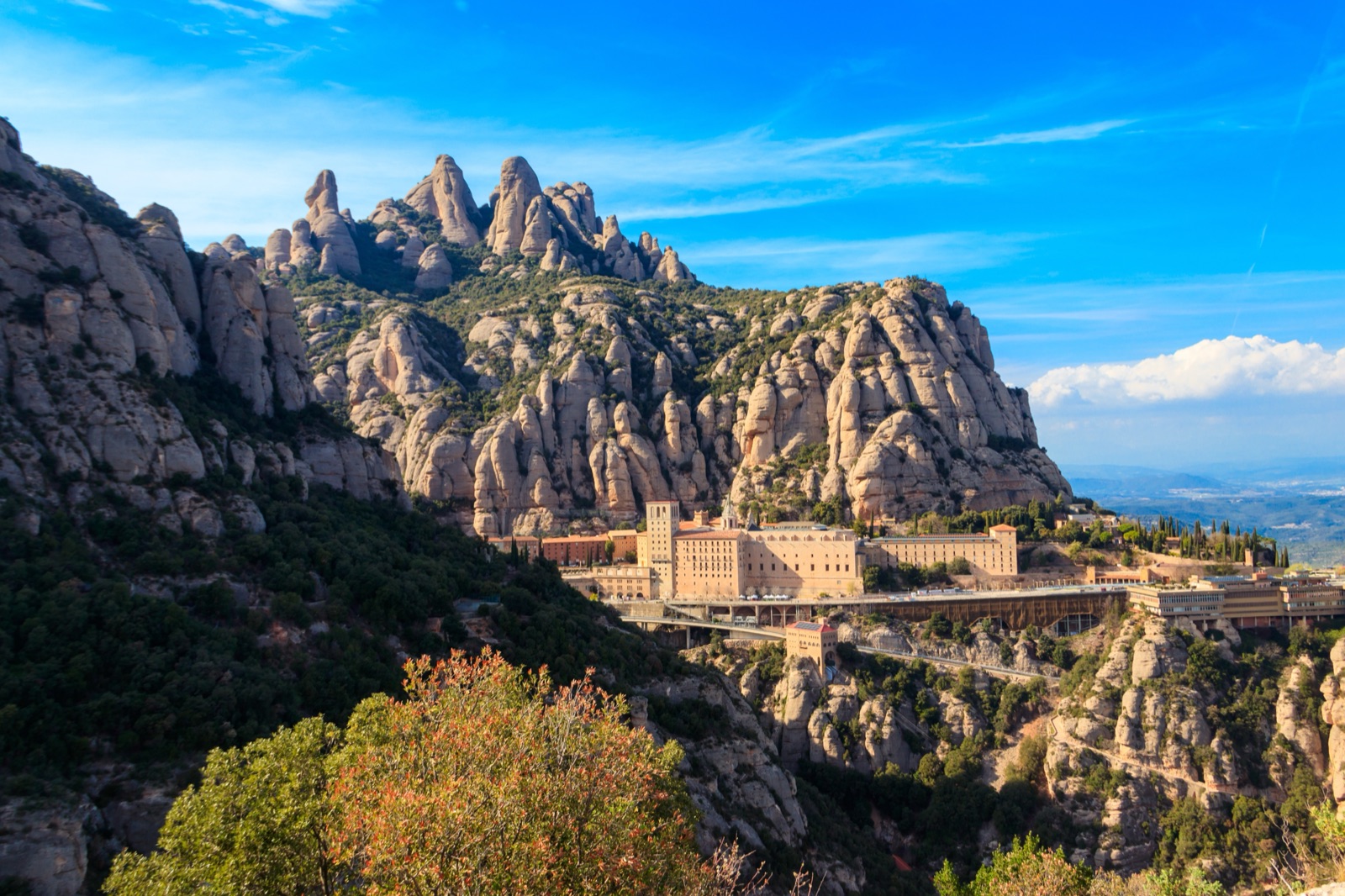
The Black Madonna of Montserrat is a wooden statue of the Virgin Mary with the Christ Child on her lap, kept in the basilica of the Benedictine monastery on the mountain of Montserrat, outside Barcelona. Catalans call her La Moreneta, “the little dark one”. The abbey describes her as a Romanesque carving from the late twelfth century and explains her dark face and hands as the result of the varnish changing colour over time. In 1881 Pope Leo XIII proclaimed her patron saint of Catalonia.
You can see her up close. A signposted entrance on the right of the basilica’s atrium leads up to the Throne of the Virgin, the small chapel where she sits above and behind the high altar. This article explains the legend of how she was found, what the records can and cannot confirm, why she is dark, what she means to Catalonia, and how to plan a visit so that the queue, the choir and the Holy Cave all fit into one day.
The short answer
- What she is: a Romanesque polychrome wooden carving of the Virgin and Child, in the pose known as the Virgin in Majesty.
- How old: late twelfth century, according to the abbey. Its historical timeline places the carving in the twelfth to thirteenth centuries.
- Why she is dark: the abbey attributes the colour to the transformation of the varnish on her face and hands over time.
- Where she was found: according to a legend first written down in 1239, in a cave on the mountain, in 880.
- Her role: patron saint of Catalonia since 1881, with her feast day on 27 April.
- When to see her: the abbey lists the Throne of the Virgin as open from 8:00 to 10:30 and from 12:00 to 18:25, plus a short evening slot from 19:20 to 19:40.
The legend of the cave
The story Montserrat tells about its statue is a classic medieval discovery legend: a sacred image found in a wild place, and a sign that it wished to stay there. The abbey notes that the first text referring to the legend dates from 1239, evidence of how long the mountain has drawn pilgrims.
The legend runs like this. In 880, one Saturday at dusk, some young shepherds on the mountain saw a great light come down from the sky, accompanied by beautiful music. The following Saturday they came back with their parents, and the vision was repeated. On the four Saturdays after that, the rector of Olesa went with them, and everyone saw the same thing.
When the bishop, who was then at Manresa, heard what had happened, he organised a visit. The party found a cave, and inside it the image of Santa Maria. The bishop proposed carrying the statue in procession to Manresa, but as soon as it was brought out it became so heavy that nobody could move it. He took this as the Virgin’s wish to remain on the mountain, and ordered a chapel built for her there.
The cave of the legend is the Santa Cova, the Holy Cave, on the mountainside below the monastery. A chapel stands at the spot today, and the walk to it is one of the best short outings at Montserrat (see below).
What the records can confirm
Legend and documented history overlap without matching exactly, and it helps to keep them apart. The abbey’s own pages set them side by side:
- 880: the date the legend gives for the discovery of the image in a cave.
- 888: the first documented mention of Montserrat.
- 1025: Oliba, Abbot of Ripoll and Bishop of Vic, founded the monastery of Montserrat.
- Twelfth to thirteenth centuries: a new Romanesque church was built, and the image venerated in today’s basilica was carved.
- 1239: the first text that refers to the legend.
- 1409: the monastery became an independent abbey.
So the statue you see is not presented as an object from 880: it is Romanesque work carved centuries after the date of the legend. The legend explains why the place became holy; the statue is the medieval image that has been venerated there ever since.
The statue itself
The image follows a model that was widespread in Romanesque Europe, the Virgin in Majesty. She sits upright and strictly frontal, with the Child on her lap at the centre of the figure. Both mother and child wear crowns.
The details carry meaning, and the abbey explains each of them:
- In her right hand the Virgin holds a sphere, which stands for the cosmos, the whole of creation.
- With her left hand she makes the gesture of placing it on the Child’s shoulder, showing that this all-powerful king is her son.
- The Child blesses with his right hand and holds a pine cone in his left, a sign of fertility and everlasting life.
In 1947 the statue was enthroned in a silver altarpiece, paid for by popular subscription, in the upper part of the basilica’s apse. That is why seeing her involves a climb: she sits above and behind the high altar, not at floor level.
Why is the Black Madonna of Montserrat black?
This is the question most visitors ask, and the answer from the people who look after her is short. The abbey says her colour is the result of the transformation of the varnish on her face and hands with the passing of time. In other words, the darkness is a change in the surface of a painted carving, not a colour chosen by the sculptor.
Other explanations circulate, most often the idea that centuries of candle smoke blackened her. The abbey’s page on the statue does not mention smoke; it gives the varnish as the reason. The nickname follows from the colour: La Moreneta means “the little dark one”, an affectionate name rather than a title.
Montserrat’s Virgin is often grouped with the other “Black Madonnas” of medieval Europe, a handy label that can wrongly suggest one shared cause behind all of them.
Patron saint of Catalonia
La Moreneta’s importance goes far beyond the monastery walls. She is the patron saint of Catalonia, and the road to that title runs through the nineteenth century, a time of ruin and recovery for Montserrat.
- 1811 to 1812: Napoleon’s army destroyed Montserrat.
- 1835: under the disentailment laws the monastery lost all its property and was reduced to a single monk.
- 1844: the monks returned to Montserrat.
- 1880: Montserrat celebrated its millennium festivities.
- 1881: the image was crowned, and Pope Leo XIII proclaimed Our Lady of Montserrat patron saint of Catalonia.
The twentieth century added further layers. During the Spanish Civil War (1936–1939) the monks were forced to leave, and the abbey records that twenty-three of them were killed; the autonomous government of Catalonia saved Montserrat from destruction and looting. In 1947 the festivities for the Virgin’s enthronement in her silver altarpiece became, in the abbey’s words, the start of the first movement of civic reconciliation in the country after the war.
Recent honours show that her standing has not faded. In 2023, on a pilgrimage to Rome marking 800 years of the Confraternity of Our Lady of Montserrat, Pope Francis presented the Golden Rose to the Virgin of Montserrat. In 2026 Pope Leo XIV made a pilgrimage to the abbey as part of a journey to Madrid, Barcelona and the Canary Islands.
The feast day and the Vigil
The feast of Our Lady of Montserrat falls on 27 April, preceded by the Vigil. On the afternoon of 26 April, year after year, the sanctuary fills with young people for music, readings and psalms, ending with the Vigil Mass. The abbey notes that since the Enthronement festivities of 1947 the Vigil has become as solemn and as busy as the feast itself. If you want a quiet visit, avoid these two days; if you want to see Montserrat at its most Catalan, they are the days to come.
Montserrat beyond Catalonia
The devotion travelled. In 1493 Bernat Boil, a former hermit of Montserrat, went with Christopher Columbus to America, and one of the islands of the Antilles was named Montserrat after the mountain. In 1522 Ignatius of Loyola, later the founder of the Jesuits, came to Montserrat as a pilgrim.
The Virolai and the Escolania
The Virgin of Montserrat has her own hymn, the Virolai, and hearing it sung in the basilica by the Escolania, the monastery’s boys’ choir, is one of the moments visitors remember most. It is sung together with the Salve, a Marian prayer, in a short service.
The Escolania is old, though the sources give different starting points. The abbey’s timeline records the first evidence of a boys’ choir school in 1223 and calls it the oldest in Europe. The Escolania’s own site speaks of a Benedictine school whose origins lie in the thirteenth century. The sanctuary’s visitor site is more cautious, citing documents from the fourteenth century. All three place it among the oldest institutions of its kind in Europe.
When the choir sings the Salve and Virolai
Some guides still say the choir sings every day. The current sources are more precise:
- Monday to Friday: the Escolania sings the Salve and Virolai at 13:00, a service of about a quarter of an hour. The Escolania says a reservation is required.
- Saturday: the boys’ choir does not sing.
- Sundays and holy days: the abbey’s timetable lists the Salve and Virolai sung by the Escolania at 12:00. The Conventual Mass at 11:00 on Sundays also needs a reservation.
The choir follows a school calendar and is occasionally away from Montserrat, so the abbey points visitors to the Escolania’s monthly calendar. In September 2026, for example, that calendar showed the Salve and Virolai at 13:00 on weekdays, and singing after Vespers from 19:15 to 19:30 on several evenings. Check it for your date and book before you travel.
Seeing La Moreneta: the Throne of the Virgin
To see the statue you join the line to her throne. The entrance is on the right of the basilica’s atrium and is signposted. The line climbs through the building to the small chapel above and behind the high altar, where you pause briefly in front of the Virgin before moving on. For many in the line this is a pilgrimage rather than a sight, so keep your voice down and put the camera away if people around you are praying.
Opening times
The abbey’s timetable and the sanctuary’s visitor site list the same main sessions, and the abbey’s is the more detailed of the two:
| Session | Abbey timetable | Sanctuary visitor site |
|---|---|---|
| Morning | 8:00 to 10:30 | 8:00 to 10:30 |
| Afternoon | 12:00 to 18:25 (from 12:15 on Sundays and holidays) | 12:00 to 18:25 |
| Evening | 19:20 to 19:40 | Not listed |
The throne closes between the morning and afternoon sessions, while the basilica itself stays open from 7:00 to 20:00. Treat the short evening slot as something to confirm on the day, and check both timetables before you travel, as hours can change for services and feast days.
How to keep the wait short
- Be in line for the morning session. Queues build as day trips arrive from Barcelona, so the earlier you join, the better.
- Use a ticket with access built in. The Trans Montserrat combined ticket, sold by the FGC railway, includes direct access, without prior reservation, to the Throne of the Virgin. The Tot Montserrat ticket includes entrance to the shrine of the Virgin and the basilica. The museum and monastery ticket includes timed entry to see the Black Madonna.
- Take a tour with priority access. The rack railway tour from Barcelona includes a guided basilica visit with priority access to the Black Madonna; the half-day small-group tour offers an optional Black Madonna ticket.
- Consider the evening slot if you are staying on the mountain or driving: the abbey lists a short opening from 19:20 to 19:40, after most day visitors have left.
The candles of the Ave Maria path
After the throne, many visitors walk the Camí de l’Avemaria, the Ave Maria path, where pilgrims leave votive lamps, or llantions, as offerings. The abbey lists it as open every day from 8:00 to 20:00. It is a quiet place to pause after the queue.
The Holy Cave: where the legend began
The Santa Cova is the cave where, according to legend, the image was found. It lies on the mountainside below the monastery and is reached by the Santa Cova funicular, built in 1929, and a path, or on foot all the way.
- The chapel dates from the end of the seventeenth century and the beginning of the eighteenth. To the right of the altar stands a reproduction of the image venerated in the basilica.
- Restoration: the chapel suffered serious damage in the French War and later natural disasters; the restored Santa Cova was inaugurated on 19 March 1997.
- The path is lined by the Monumental Rosary: fifteen modernist sculptural groups for the fifteen mysteries of the Rosary, built between 1896 and 1916. Architects who worked on it included Joan Martorell, Antoni Gaudí and Bonaventura Bassegoda.
- The walk has no real difficulty, but the last section on the way back climbs steeply; you can avoid it by taking the funicular.
- Opening hours: the abbey lists the Santa Cova as opening at 10:30 and closing at 17:00, but hours are shorter in the quieter months: in November 2026 the sanctuary’s timetable gave 10:30 to 16:00 on weekdays and 10:30 to 16:30 at weekends and on holidays.
Walking the path past the Rosary to the chapel where the story began is the natural end to a day built around La Moreneta. Our guide to hiking Montserrat covers the funicular and the path in more detail.
Planning a day around the Black Madonna
A day built around La Moreneta has three fixed points: the throne sessions, the choir and the Holy Cave’s hours. Everything else can move around them.
On a weekday
Arrive early and join the line for the morning session at the throne (8:00 to 10:30). Visit the Museum of Montserrat when it opens at 10:00, then take your place in the basilica before 13:00 for the Salve and Virolai, having reserved in advance. After lunch, take the funicular down to the Santa Cova, which closes at 17:00 in the abbey’s timetable and earlier in the quieter months.
On a Saturday
The boys’ choir does not sing, so the day is simpler. Use the morning or afternoon throne session and give the time you save to the Santa Cova path or the museum.
On a Sunday
Reserve a place at the Conventual Mass at 11:00 if you want to attend; the abbey’s timetable lists the Salve and Virolai at 12:00. The throne’s afternoon session starts at 12:15 on Sundays and holidays.
On a tour from Barcelona
A guided tour handles the transport and, depending on the product, access to the throne. The rack railway tour with priority access to the Black Madonna takes about 5 hours; the small-group half day takes about 5.5 hours, with an optional Black Madonna ticket. Check whether the itinerary puts you in the basilica at 13:00, and whether the Escolania reservation is included, since it is now needed for the weekday Salve. Our guide to getting to Montserrat compares travelling independently, and our comparison of Montserrat tours from Barcelona sets the tours against the combined tickets.
Our guide to visiting the monastery covers the basilica, the museum and the rest of the sanctuary.
Frequently asked questions
Why is the Black Madonna of Montserrat black?
The abbey says her colour comes from the varnish on her face and hands changing over time, so the darkness is an ageing of the surface rather than the sculptor’s choice. Her nickname, La Moreneta, means “the little dark one”.
How old is the Black Madonna of Montserrat?
The abbey dates the carving to the late twelfth century, and its historical timeline places it in the twelfth to thirteenth centuries. The legend sets her discovery in a cave in 880, centuries before the carving; that legend was first written down in 1239.
When can I see La Moreneta?
The abbey lists the Throne of the Virgin as open from 8:00 to 10:30 and from 12:00 to 18:25 (from 12:15 on Sundays and holidays), with a short evening opening from 19:20 to 19:40. The basilica itself is open from 7:00 to 20:00. Check before you go, as times can change for services.
When does the Escolania sing the Virolai?
Monday to Friday at 13:00, with a reservation required; on Sundays and holy days the abbey lists it at 12:00. The boys’ choir does not sing on Saturdays, and the calendar changes with the school year, so check it for your date.
Where was the Black Madonna found?
According to legend, in the Santa Cova, a cave on the mountainside below the monastery. A chapel from the late seventeenth and early eighteenth centuries stands there now, open from 10:30 to 17:00 in the abbey’s timetable.